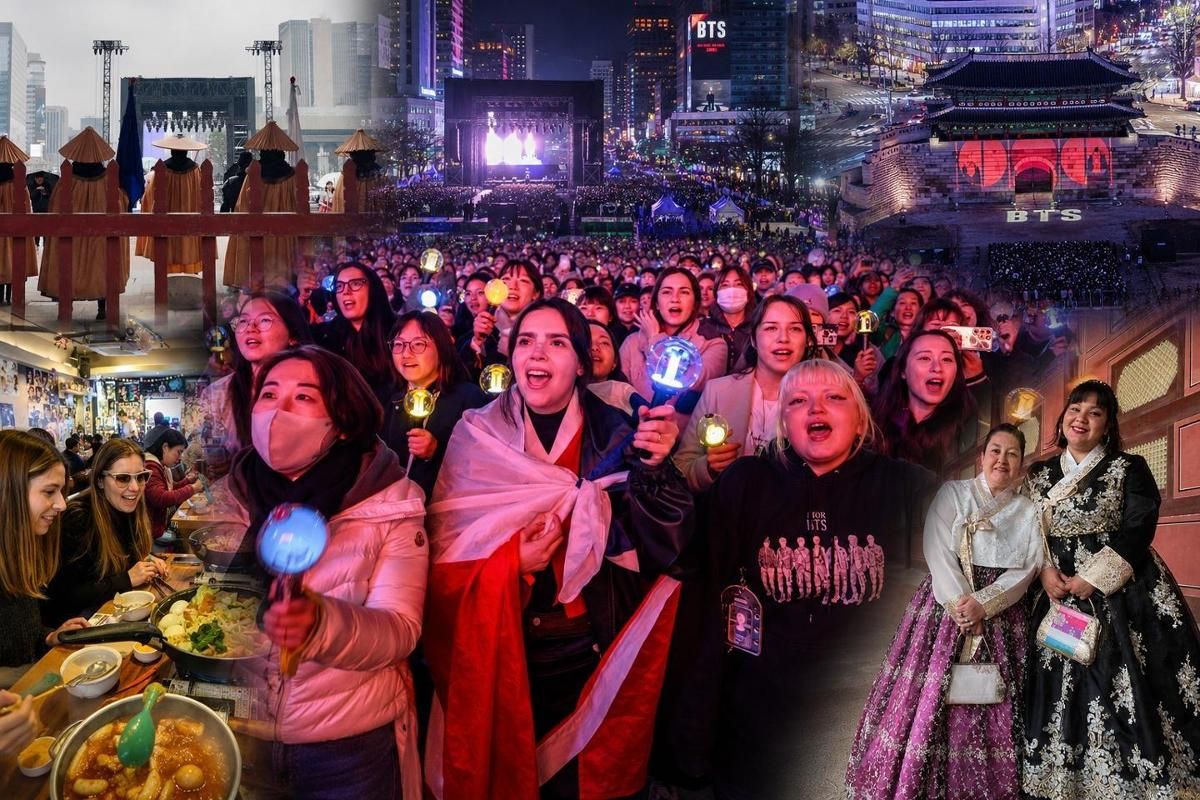
Korean culture has become part of everyday life around the world. Former U.S. President Barack Obama nodded along as children at a care home sang “Soda Pop,” a song from the animated film “KPop Demon Hunters.” Director Steven Spielberg waved a K-pop light stick at the Academy Awards. Such scenes, in which people across generations share an enthusiasm for Korean culture, would once have been difficult to imagine. They reflect the global rise of Korean content and K-pop fandom. Korean content exports reached a record 22.26 trillion won ($14.9 billion) in 2025, according to the Ministry of Culture, Sports and Tourism. The global spectacle highlights how overseas audiences interpret the Korean wave and its impact on local cultures. Audiences see different stages at BTS show One of the biggest events in Korean popular culture during the first half of 2026 came March 21, when K-pop supergroup BTS staged its comeback concert at Gwanghwamun Square in central Seoul. The official event title was “BTS THE COMEBACK LIVE | ARIRANG.” Netflix streamed the show live to more than 190 countries, tur